KeyGuard
KeyGuard helps users browse securely and efficiently by managing and autofilling strong passwords across devices.
team
2 Designers, PM, Developer
Year
2023-2024
services
Product Design | Web App | Brand Identity
[OVERVIEW]
KeyGuard is a free, easy-to-use password manager that helps users store, generate, and autofill secure passwords across their browsers. It works smoothly with Chrome, Firefox, and Edge, and is designed to make browsing safer and faster without adding friction.
I developed the website using WordPress and Elementor for this project, built a native desktop application, and created the browser extension.
Additionally, I designed and produced marketing banners to support the product’s visibility and engagement.
The Pain Points
Password Overload
Users juggle dozens of credentials across platforms. They often forget them or reuse weak passwords like "123456", which creates frustration and security risks.
Security Vulnerabilities
People share passwords via WhatsApp, email, or sticky notes. Non-tech-savvy users rely on others for recovery, increasing exposure to breaches.
Bloated Tools
Popular password managers often include unnecessary features, such as VPNs or dark web monitoring, which can make them feel cluttered and overpriced.
No Sync, No Flow
Without seamless sync across devices, users face inconsistencies and waste time on manual login management.
Team Struggles
Businesses often lack a secure and intuitive way to share and manage passwords among employees.
Password Overload
Users juggle dozens of credentials across platforms. They often forget them or reuse weak passwords like "123456", which creates frustration and security risks.
Security Vulnerabilities
People share passwords via WhatsApp, email, or sticky notes. Non-tech-savvy users rely on others for recovery, increasing exposure to breaches.
Bloated Tools
Popular password managers often include unnecessary features, such as VPNs or dark web monitoring, which can make them feel cluttered and overpriced.
No Sync, No Flow
Without seamless sync across devices, users face inconsistencies and waste time on manual login management.
Team Struggles
Businesses often lack a secure and intuitive way to share and manage passwords among employees.
Password Overload
Users juggle dozens of credentials across platforms. They often forget them or reuse weak passwords like "123456", which creates frustration and security risks.
Security Vulnerabilities
People share passwords via WhatsApp, email, or sticky notes. Non-tech-savvy users rely on others for recovery, increasing exposure to breaches.
Bloated Tools
Popular password managers often include unnecessary features, such as VPNs or dark web monitoring, which can make them feel cluttered and overpriced.
No Sync, No Flow
Without seamless sync across devices, users face inconsistencies and waste time on manual login management.
Team Struggles
Businesses often lack a secure and intuitive way to share and manage passwords among employees.
The Results
Following strategic design changes to the onboarding flow focused on clarity and B2C simplicity. wwWe saw significant measurable gains. We achieved +124 Installs and +869 Page views, leading to 2.73K Weekly users. Crucially, this growth is entirely organic, with no paid campaigns. This success validates that our new design system and focused UX strategy directly improved engagement and completion rates, driven purely by product quality and word-of-mouth adoption.
Following strategic design changes to the onboarding flow focused on clarity and B2C simplicity. wwWe saw significant measurable gains. We achieved +124 Installs and +869 Page views, leading to 2.73K Weekly users. Crucially, this growth is entirely organic, with no paid campaigns. This success validates that our new design system and focused UX strategy directly improved engagement and completion rates, driven purely by product quality and word-of-mouth adoption.
Following strategic design changes to the onboarding flow focused on clarity and B2C simplicity. wwWe saw significant measurable gains. We achieved +124 Installs and +869 Page views, leading to 2.73K Weekly users. Crucially, this growth is entirely organic, with no paid campaigns. This success validates that our new design system and focused UX strategy directly improved engagement and completion rates, driven purely by product quality and word-of-mouth adoption.
User Research
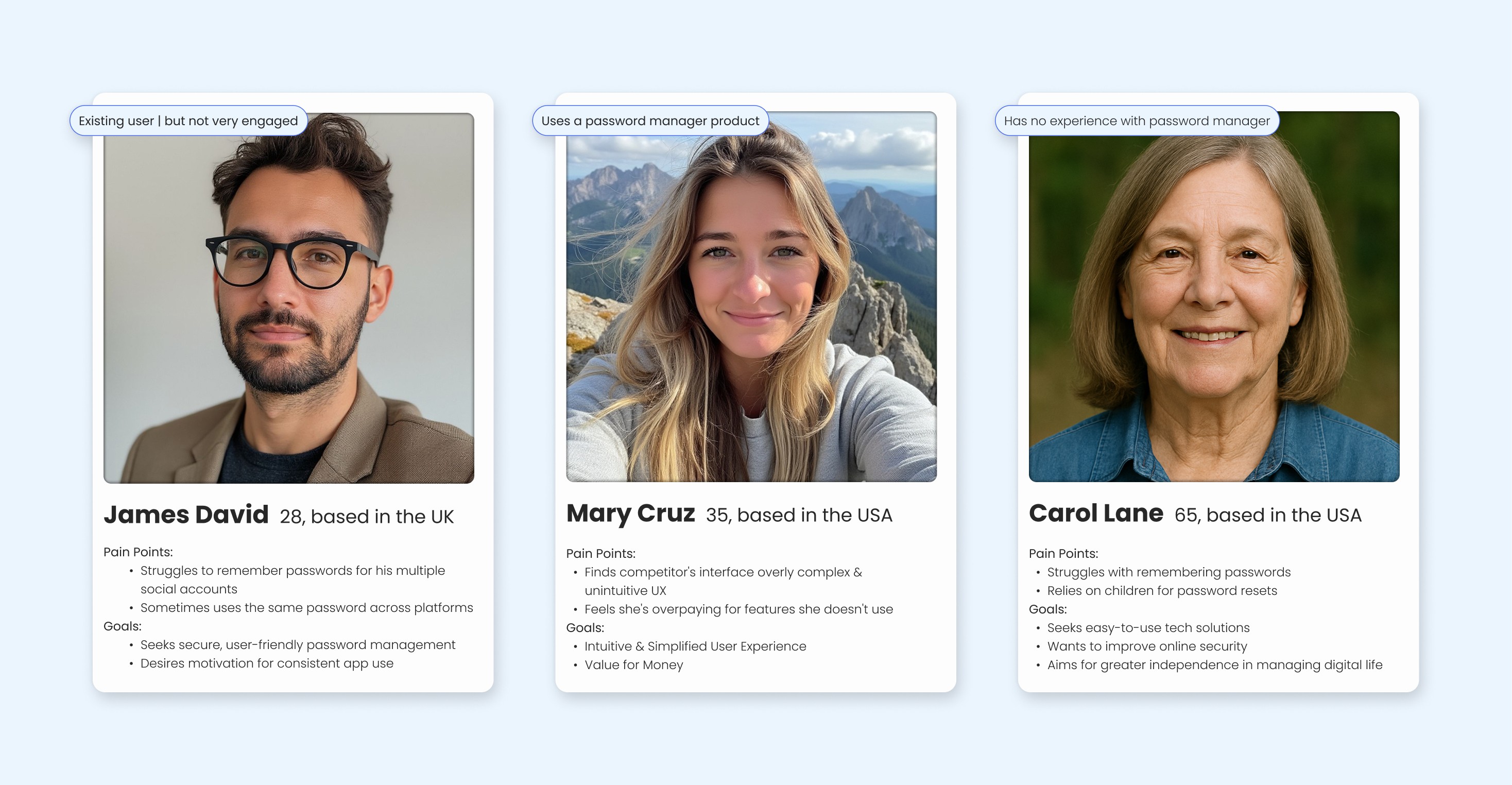
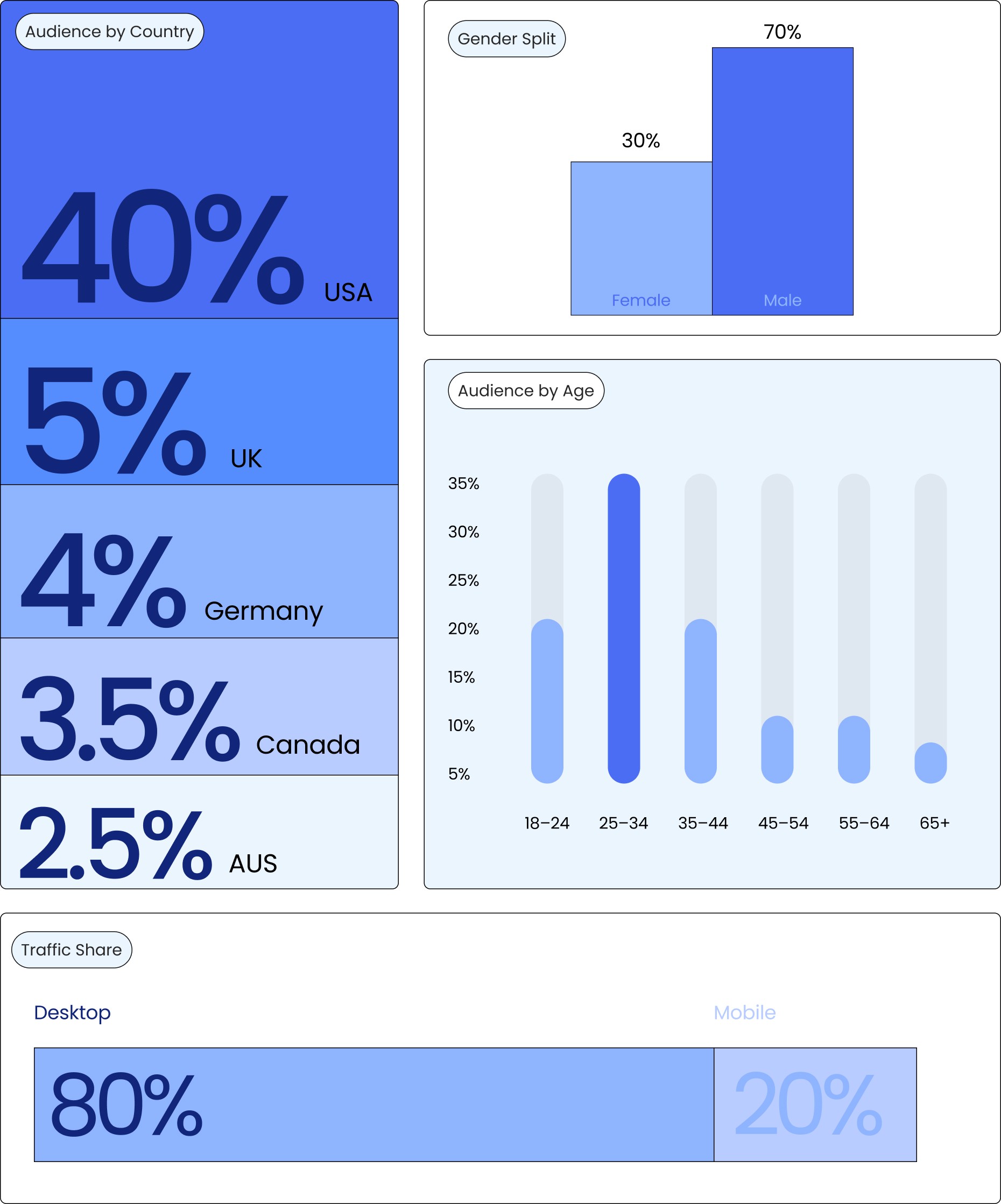
To better understand the Keyguard user base, I conducted user research together with my product manager and another designer. We focused on demographics and usage patterns, finding that the majority of users were based in the United States, with additional audiences from the UK, Germany, Canada, and Australia. Most users were between the ages of 25 and 34 and preferred accessing the platform via desktop. These insights guided improvements to the registration flow, CTA hierarchy, and tailored microcopy, resulting in measurable gains in user experience and engagement.
To better understand the Keyguard user base, I conducted user research together with my product manager and another designer. We focused on demographics and usage patterns, finding that the majority of users were based in the United States, with additional audiences from the UK, Germany, Canada, and Australia. Most users were between the ages of 25 and 34 and preferred accessing the platform via desktop. These insights guided improvements to the registration flow, CTA hierarchy, and tailored microcopy, resulting in measurable gains in user experience and engagement.
To better understand the Keyguard user base, I conducted user research together with my product manager and another designer. We focused on demographics and usage patterns, finding that the majority of users were based in the United States, with additional audiences from the UK, Germany, Canada, and Australia. Most users were between the ages of 25 and 34 and preferred accessing the platform via desktop. These insights guided improvements to the registration flow, CTA hierarchy, and tailored microcopy, resulting in measurable gains in user experience and engagement.
Following strategic design changes to the onboarding flow focused on clarity and B2C simplicity. wwWe saw significant measurable gains. We achieved +124 Installs and +869 Page views, leading to 2.73K Weekly users. Crucially, this growth is entirely organic, with no paid campaigns. This success validates that our new design system and focused UX strategy directly improved engagement and completion rates, driven purely by product quality and word-of-mouth adoption.
Pain Points
Password Overload
Users juggle dozens of credentials across platforms. They often forget them or reuse weak passwords like "123456", which creates frustration and security risks.
Security Vulnerabilities
People share passwords via WhatsApp, email, or sticky notes. Non-tech-savvy users rely on others for recovery, increasing exposure to breaches.
Bloated Tools
Popular password managers often include unnecessary features, such as VPNs or dark web monitoring, which can make them feel cluttered and overpriced.
No Sync, No Flow
Without seamless sync across devices, users face inconsistencies and waste time on manual login management.
Team Struggles
Businesses often lack a secure and intuitive way to share and manage passwords among employees.
Design Impact
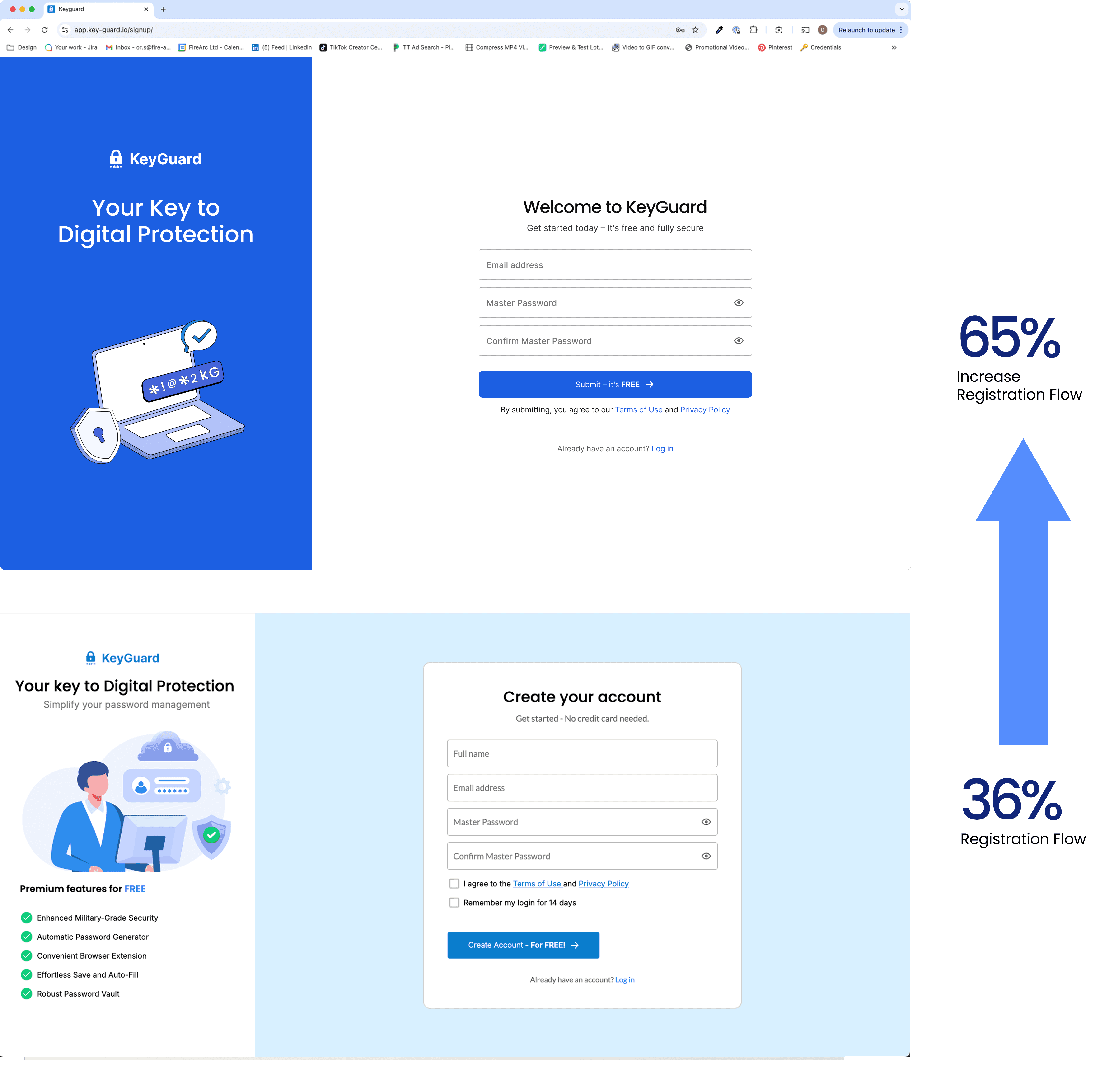
To address a drop in user logins to the web app, we made small but strategic changes to the registration and onboarding experience. The updated design, focused on clarity and trust, significantly increased user engagement and improved completion rates across platforms.
To address a drop in user logins to the web app, we made small but strategic changes to the registration and onboarding experience. The updated design, focused on clarity and trust, significantly increased user engagement and improved completion rates across platforms.
Following strategic design changes to the onboarding flow focused on clarity and B2C simplicity. wwWe saw significant measurable gains. We achieved +124 Installs and +869 Page views, leading to 2.73K Weekly users. Crucially, this growth is entirely organic, with no paid campaigns. This success validates that our new design system and focused UX strategy directly improved engagement and completion rates, driven purely by product quality and word-of-mouth adoption.
A Simple Onboarding Journey
To ensure a smooth onboarding experience, we've created an intuitive flow for new users: downloading the extension from the Chrome Web Store, creating an account, and seamlessly accessing the core product. The clips below demonstrate the key steps: installation and sign-up, followed by logging in via the extension.
To ensure a smooth onboarding experience, we've created an intuitive flow for new users: downloading the extension from the Chrome Web Store, creating an account, and seamlessly accessing the core product. The clips below demonstrate the key steps: installation and sign-up, followed by logging in via the extension.
Following strategic design changes to the onboarding flow focused on clarity and B2C simplicity. wwWe saw significant measurable gains. We achieved +124 Installs and +869 Page views, leading to 2.73K Weekly users. Crucially, this growth is entirely organic, with no paid campaigns. This success validates that our new design system and focused UX strategy directly improved engagement and completion rates, driven purely by product quality and word-of-mouth adoption.
KeyGuard
KeyGuard helps users browse securely and efficiently by managing and autofilling strong passwords across devices.
Year
2023-2024
team
2 Designers, PM, Developer
services
Product Design | Web App | Brand Identity
[OVERVIEW]
KeyGuard is a free, easy-to-use password manager that helps users store, generate, and autofill secure passwords across their browsers. It works smoothly with Chrome, Firefox, and Edge, and is designed to make browsing safer and faster without adding friction.
I developed the website using WordPress and Elementor for this project, built a native desktop application, and created the browser extension.
Additionally, I designed and produced marketing banners to support the product’s visibility and engagement.
[OVERVIEW]
KeyGuard is a free, easy-to-use password manager that helps users store, generate, and autofill secure passwords across their browsers. It works smoothly with Chrome, Firefox, and Edge, and is designed to make browsing safer and faster without adding friction.
I developed the website using WordPress and Elementor for this project, built a native desktop application, and created the browser extension.
Additionally, I designed and produced marketing banners to support the product’s visibility and engagement.
KeyGuard
KeyGuard helps users browse securely and efficiently by managing and autofilling strong passwords across devices.
Year
2023-2024
team
2 Designers, PM, Developer
services
Product Design | Web App | Brand Identity